June 27, 2025
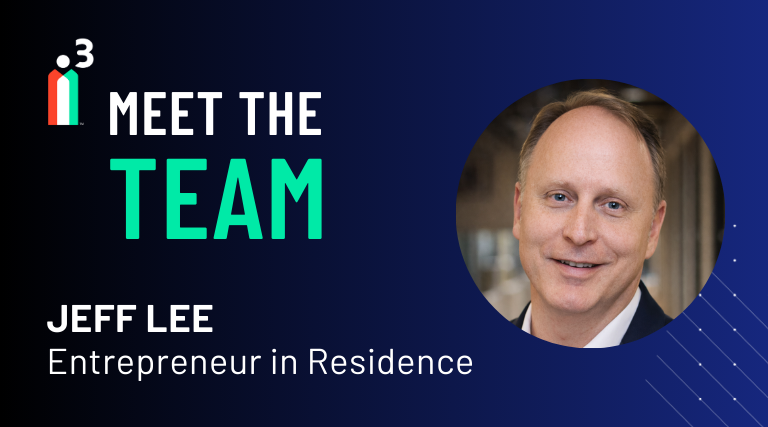
Meet the Team: Drew Narayan, Entrepreneur in Residence

What drew you to the Entrepreneur in Residence (EIR) role at i-Cubed, and how does it align with the rest of your work?
I’m an engineer by training, with both bachelor's and master's degrees from Duke. After working as an engineer, I realized I was equally interested in the business aspects of healthcare, which led me to pursue my MBA. I have 25 years of commercial experience in healthcare, spanning roles at General Electric, Blue Cross, and several early-stage ventures.
I’ve made a couple of pivots over the last decade. First, I moved from larger corporate institutions to smaller companies more focused on innovation. I am energized by the speed and agility this allows. Next, I wanted to move closer to idea generation and initial commercialization, which led me to focus on startups.
Currently, I run my own consulting practice, DGN Elevate, where I advise and mentor healthcare startups. I’m also active in the healthcare innovation community, supporting early-stage ventures through organizations like First Flight Venture Center, Duke New Ventures, and the Duke Clinical Research Institute.
I was introduced to the i-Cubed team through a mutual connection while working with First Flight Venture Center as a navigator. The EIR role at i-Cubed is a natural extension of my ongoing focus on healthcare startups and innovation. It allows me to leverage my commercial experience to support early-stage innovators, which aligns closely with my passion and other professional engagements. Across all my roles, I’ve been dedicated to helping teams commercialize promising ideas into solutions that advance healthcare.
How would you describe your role as an i-Cubed EIR?
I see myself as a “roll up your sleeves” advisor. My approach is hands-on-I work closely with teams to navigate challenges, test hypotheses, and accelerate their progress from idea to impact.
The EIR role is truly multifaceted. While I provide strategic guidance, I also actively engage with teams to define their product offering, shape go-to-market strategies and build a pipeline of early adopters. My goal is to be a collaborative partner, not just an advisor-helping teams translate vision into real-world results.
What early questions do you ask to help teams define their path and move from concept to something tangible?
I usually start by asking:
- What specific problem are you solving, and for whom?
- What evidence or feedback have you gathered from potential users or stakeholders?
- Who are your early adopters, and what’s your plan to reach them?
These questions help teams clarify their value proposition, understand their target market, and set a focused path for validation and development.
What’s the most common early misstep you see in startup thinking, and how do you help teams course-correct?
The most common early misstep is falling in love with the solution instead of the problem. Teams often rush to build features before deeply understanding user needs or the market landscape. I help teams course-correct by encouraging them to get out of the building - talk to users, gather feedback, and iterate on their assumptions. I also stress the importance of validating the business model early, not just the technology.
How do you see the healthcare/clinical research innovation landscape evolving, and where can academic institutions like Duke have a greater impact?
The healthcare innovation landscape is rapidly evolving, especially with the integration of AI, digital health, and precision medicine. Academic institutions like Duke have a unique opportunity to bridge research and real-world application by fostering interdisciplinary collaboration, supporting translational research, and providing infrastructure for clinical validation and commercialization. They can also play a greater role in training the next generation of clinician-innovators and facilitating partnerships between academia, startups, and industry.
For instance, one of the innovations I am collaborating on is Luminate Insights - a team focused on industry education in the latest healthcare research methods, such as real-world evidence and how to leverage AI.
How do you guide teams to think about product-market fit, particularly in the healthcare space?
I emphasize that product-market fit in healthcare is not just about desirability but also feasibility and viability - solutions must meet clinical needs, fit into existing workflows, and align with regulatory and reimbursement pathways. I encourage teams to engage early with all stakeholders and to pilot their solutions in real-world settings to gather actionable feedback and evidence.
What excites you about AI’s potential in this field and what concerns you?
I’m excited by AI’s potential to accelerate discovery, personalize care, and improve operational efficiency in healthcare. AI can unlock insights from complex datasets, streamline clinical trials, and enable more precise diagnostics and treatments. My work at PeriGen gave me a firsthand view of how AI can support clinicians and improve patient outcomes.
My main concerns center on algorithmic bias and the need for transparency and clinical oversight. Ensuring that AI tools are validated, ethically deployed, and integrated with human expertise is critical for patient safety and trust.
Outside of work, what’s something you love to do that recharges or inspires you?
Outside of work, I’m passionate about exercise - especially activities that get me outdoors. I love running and hiking, whether it’s on a wooded trail or through a local park. Being active in nature is my way to recharge; it helps me clear my mind, sparks creativity, and keeps me energized for the challenges of work.