
i-Cubed Team Fuels Innovation to Transform Clinical Research at the DCRI and Beyond


July 18, 2025

i-Cubed Team Fuels Innovation to Transform Clinical Research at the DCRI and Beyond

In this video, Donna Parker shares the origins and mission of i-Cubed


For the i-Cubed team, innovation is more than a priority — it’s at the center of every conversation.

i-Cubed, the Duke Clinical Research Institute's (DCRI’s) center for clinical research innovation, is comprised of talented DCRI colleagues with the resources and expertise to develop solutions that will transform clinical research for the better.

i-Cubed supports individuals, teams, and organizations in transforming their ideas into tools, technologies, and processes to benefit people everywhere.

“At the DCRI, there are so many faculty and staff who have been working on projects and have made their clinical trials better, faster, more efficient, and open to different people,” explained Donna Parker, i-Cubed operations director. “What we want to do is help those people who have these amazing ideas think through whether there is a commercial opportunity.”

A Culture of Innovation

At its core, i-Cubed is about people — those who imagine new possibilities and those who help make them real. The team fosters a culture of curiosity, inclusivity, and mentorship, where new ideas are welcomed.

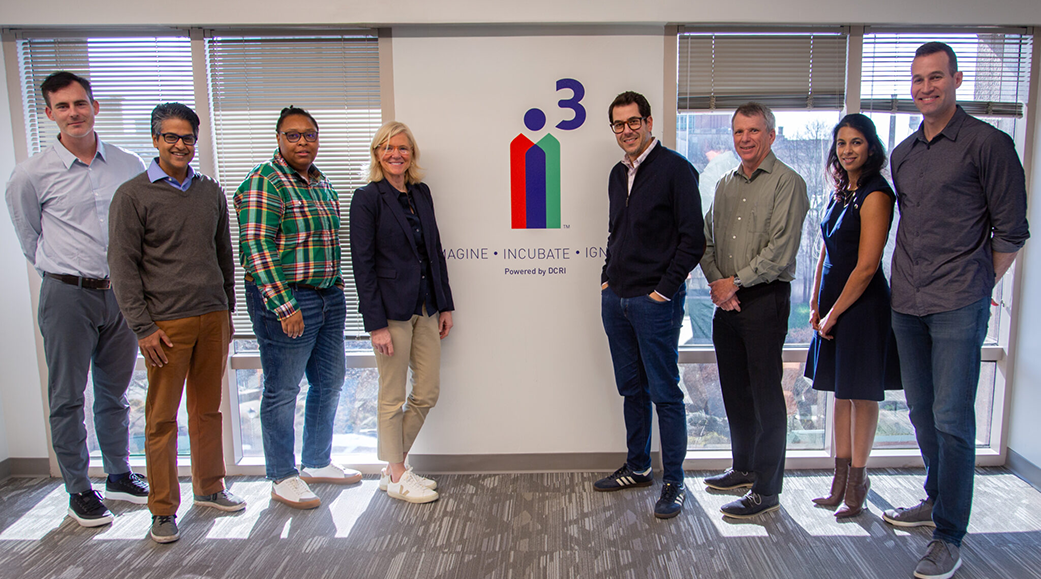
The i-Cubed core team is comprised of Executive Director Micky Cohen-Wolkowiez, Operations Director Donna Parker, Partner Innovations Project Manager Brian Blackmon, Associate Director Christoph Hornik, Startup Innovations Project Manager Samantha Raines, Associate Director Aparna Swaminathan, and Strategy Director Willette Wilkins.

Parker, Blackmon, and Raines are fully dedicated to i-Cubed, while other team members contribute through partial appointments alongside their other roles at Duke. The team maintains its momentum through weekly product core meetings, bi-weekly cross-functional incubation sessions, and quarterly leadership meetings to align on strategy and generate new ideas. A culture of collaboration supports open idea-sharing, experimentation, and rapid iteration.

“Our team brings together decades of clinical research experience, and several members of this team wear multiple hats across the DCRI,” Cohen-Wolkowiez said. “That perspective keeps us intimately familiar with the challenges at hand and enables us to develop solutions that work in the real world.”

i-Cubed works closely with experts across DCRI to gather input that informs product design and implementation. The center is fully embedded within the broader Duke research ecosystem, focused on developing services and tools that streamline clinical trial operations, guided by an ethos of entrepreneurial thinking and practical, cross-disciplinary collaboration.

The i-Cubed Advisory Board includes experts in medicine, clinical research, technology, and finance who are committed to the i-Cubed mission.

“The i-Cubed team truly bridges the gap between our vast clinical and operational expertise and commercial viability,” said Adrian Hernandez, DCRI Executive Director and i-Cubed Advisor. “As DCRI’s hub for innovation, i-Cubed enables us to anticipate and adapt to future opportunities and challenges. It is a long-term investment in both DCRI’s capabilities and the future of clinical research.”

Celebrating a Year of Milestones

In its first year, the i-Cubed team supported the launch of a wide range of innovations — from digital health platforms to recruitment tools — demonstrating the breadth and depth of innovation at the DCRI. These startups are just the beginning of a portfolio intended to make meaningful differences in the speed, efficiency, and impact of clinical research.

Launched i-Cubed innovations:

  • ExecRx: A new model to help health innovation companies scale and grow by connecting them to on-demand medical and scientific expertise
  • KidsHeart: A sleek healthcare delivery platform to engage families and conduct pediatric cardiovascular studies
  • BlueButton: A novel method to enhance the connection between patient data and health insurer information, as well as other systems
  • PreMatch 360: A pre-screening solution that addresses recruitment challenges to minimize screen failure, increase engagement, and accelerate trial timelines
  • Luminate Insights: An educational and training provider focused on strengthening clinical research capacity

The team has also held the first two events in its Innovation Spotlight series, showcasing emerging startups and fostering dialogue among Duke’s research community.

“We’re here to help innovators at any stage,” Parker said. “Whether you’re refining a concept or ready to launch, we have the resources, mentorship, and infrastructure to bring your vision to life.”

The i-Cubed Approach

i-Cubed supports innovation through two unique verticals:

  • Startup Innovations: This path is dedicated to supporting innovators within the DCRI and Duke University by fostering collaboration and assisting them in transforming their ideas into thriving commercial ventures
  • Partner Innovations: This path involves partnering with industry innovators, specifically those in the biopharma and health technology spaces, to refine and test groundbreaking ideas

“We’ve built a multidisciplinary ecosystem that brings together the right people, tools, and expertise to move ideas forward,” Parker said.

How to Collaborate with the i-Cubed Team

If you’re a DCRI or Duke University colleague with a new idea, the team encourages you to reach out. From early-stage consultation to full-scale development and launch, they want to support DCRI and Duke colleagues in bringing innovative ideas to life.

“If you’re wondering whether your idea is ready, the answer is: let’s talk,” Parker said. “We’re here to Imagine, Incubate, and Ignite together.”

To collaborate with the i-Cubed team, please contact icubedcenter@duke.edu.

You can also submit your idea here.
Meet the Team: Drew Narayan, Entrepreneur in Residence

June 27, 2025

Meet the Team: Drew Narayan, Entrepreneur in Residence

What drew you to the Entrepreneur in Residence (EIR) role at i-Cubed, and how does it align with the rest of your work? 

I’m an engineer by training, with both bachelor's and master's degrees from Duke. After working as an engineer, I realized I was equally interested in the business aspects of healthcare, which led me to pursue my MBA. I have 25 years of commercial experience in healthcare, spanning roles at General Electric, Blue Cross, and several early-stage ventures.

I’ve made a couple of pivots over the last decade. First, I moved from larger corporate institutions to smaller companies more focused on innovation. I am energized by the speed and agility this allows. Next, I wanted to move closer to idea generation and initial commercialization, which led me to focus on startups.

Currently, I run my own consulting practice, DGN Elevate, where I advise and mentor healthcare startups. I’m also active in the healthcare innovation community, supporting early-stage ventures through organizations like First Flight Venture Center, Duke New Ventures, and the Duke Clinical Research Institute.

I was introduced to the i-Cubed team through a mutual connection while working with First Flight Venture Center as a navigator. The EIR role at i-Cubed is a natural extension of my ongoing focus on healthcare startups and innovation. It allows me to leverage my commercial experience to support early-stage innovators, which aligns closely with my passion and other professional engagements. Across all my roles, I’ve been dedicated to helping teams commercialize promising ideas into solutions that advance healthcare.

How would you describe your role as an i-Cubed EIR? 

I see myself as a “roll up your sleeves” advisor. My approach is hands-on-I work closely with teams to navigate challenges, test hypotheses, and accelerate their progress from idea to impact.

The EIR role is truly multifaceted. While I provide strategic guidance, I also actively engage with teams to define their product offering, shape go-to-market strategies and build a pipeline of early adopters. My goal is to be a collaborative partner, not just an advisor-helping teams translate vision into real-world results.

What early questions do you ask to help teams define their path and move from concept to something tangible?

I usually start by asking:

  • What specific problem are you solving, and for whom?
  • What evidence or feedback have you gathered from potential users or stakeholders?
  • Who are your early adopters, and what’s your plan to reach them?

These questions help teams clarify their value proposition, understand their target market, and set a focused path for validation and development.

What’s the most common early misstep you see in startup thinking, and how do you help teams course-correct? 

The most common early misstep is falling in love with the solution instead of the problem. Teams often rush to build features before deeply understanding user needs or the market landscape. I help teams course-correct by encouraging them to get out of the building - talk to users, gather feedback, and iterate on their assumptions. I also stress the importance of validating the business model early, not just the technology.
How do you see the healthcare/clinical research innovation landscape evolving, and where can academic institutions like Duke have a greater impact?

The healthcare innovation landscape is rapidly evolving, especially with the integration of AI, digital health, and precision medicine. Academic institutions like Duke have a unique opportunity to bridge research and real-world application by fostering interdisciplinary collaboration, supporting translational research, and providing infrastructure for clinical validation and commercialization. They can also play a greater role in training the next generation of clinician-innovators and facilitating partnerships between academia, startups, and industry.

For instance, one of the innovations I am collaborating on is Luminate Insights - a team focused on industry education in the latest healthcare research methods, such as real-world evidence and how to leverage AI.

How do you guide teams to think about product-market fit, particularly in the healthcare space? 

I emphasize that product-market fit in healthcare is not just about desirability but also feasibility and viability - solutions must meet clinical needs, fit into existing workflows, and align with regulatory and reimbursement pathways. I encourage teams to engage early with all stakeholders and to pilot their solutions in real-world settings to gather actionable feedback and evidence.

What excites you about AI’s potential in this field and what concerns you? 

I’m excited by AI’s potential to accelerate discovery, personalize care, and improve operational efficiency in healthcare. AI can unlock insights from complex datasets, streamline clinical trials, and enable more precise diagnostics and treatments. My work at PeriGen gave me a firsthand view of how AI can support clinicians and improve patient outcomes.

My main concerns center on algorithmic bias and the need for transparency and clinical oversight. Ensuring that AI tools are validated, ethically deployed, and integrated with human expertise is critical for patient safety and trust.

Outside of work, what’s something you love to do that recharges or inspires you? 

Outside of work, I’m passionate about exercise - especially activities that get me outdoors. I love running and hiking, whether it’s on a wooded trail or through a local park. Being active in nature is my way to recharge; it helps me clear my mind, sparks creativity, and keeps me energized for the challenges of work.

How a New Duke Startup is Using AI to Help Researchers Work Smarter

June 18, 2025

How a New Duke Startup is Using AI to Help Researchers Work Smarter

When Carly Brantner, Ph.D., a biostatistician and clinical researcher at the Duke Clinical Research Institute (DCRI), began exploring a new line of research on variation in female hormones across the lifespan, she struggled to find funding opportunities that fit. “I’ve spent hours searching for the right funding announcements,” she said. “Identifying them in time to write a compelling application is always a challenge, and doing so while trying to make sense of the available literature can eliminate some of the time I have to ideate on research directions."

Brantner’s experience isn’t unique. Many researchers face similar roadblocks – time lost to repetitive, manual administrative tasks rather than advancing scientific ideas. These common pain points inspired a new Duke-born startup aiming to change how research gets done.

After working closely with scientists at Duke and across the Research Triangle, Pratt School of Engineering faculty Jon Reifschneider and Dr. Pramod Singh gained appreciation for how much time and effort researchers spent on tasks that could be made easier with the right tools. That insight led them to found Inquisite, a company built on their conviction that technology, especially AI, has the potential to help accelerate scientific progress for a better world.

Inquisite is a platform that uses agentic AI, a type of artificial intelligence that doesn’t just respond to questions, but rather actively assists with tasks, makes decisions, and follows through on goals, helping researchers stay on track throughout a project.

Instead of hours spent combing through databases or manually drafting proposals, Inquisite’s tools aim to handle the tedious parts, such as searching for relevant studies, synthesizing results, and even drafting grant applications so that researchers can focus on big-picture thinking.

Inquisite is built on a custom knowledge graph, a system that organizes scientific information in a way that highlights connections between studies, concepts, and data points, helping researchers find what’s relevant faster, pulling data from scientific literature, clinical trials, patents, and more. “You can ask it something like, ‘What’s the current evidence linking sleep patterns to depression?’ and within seconds, it pulls up peer-reviewed studies, links related trials, and even explains how the findings connect,” said Singh. “It doesn’t just give you answers, it helps you think.”

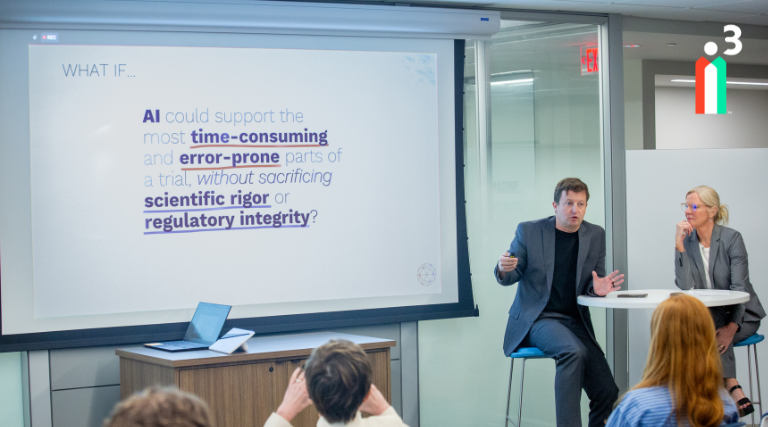
At a recent Innovation Spotlight hosted by i-Cubed, the DCRI’s center for clinical research innovation, Reifschneider gave a live demo of two of Inquisite’s main features: Research Assistant and Grants Assistant. The first helps users search and summarize scientific literature, complete with cited sources. The second scans for relevant funding opportunities and even helps draft proposal language.

“Innovation in clinical research isn’t just about new discoveries, it’s also about finding better ways to do the work,” said i-Cubed Operations Director Donna Parker.“ Tools like Inquisite support that kind of progress by making the research process itself more efficient, transparent, and ultimately, more impactful.”

i-Cubed is currently working with Inquisite to help the team identify early adopters and use cases in clinical trial research organizations. Inquisite is actively gathering feedback from researchers to refine and expand its capabilities, including agents for trial design and data analysis. “We’re not building this in a vacuum. The only way to get it right is to refine it alongside the people who are actively using it,” commented Reifschneider.

Inquisite, now available as a subscription-based service, is structured as a public benefit corporation, a type of company committed not just to profit but to public good. In this case, that means making research faster, more accurate, and more accessible.

“If a tool like this can support some of the most time-consuming parts of our work, it will help researchers focus on the bigger picture in study design and analyzing data more effectively,” said Brantner. “That’s not just a win for researchers, it’s a win for those affected by our research. Faster, smarter research means better treatments can reach people sooner.”

To learn more, watch the full recording of the session here or visit Inquisite.ai.


About i-Cubed  

i-Cubed™ is the center for clinical research innovation, powered by the unique expertise and resources of the Duke Clinical Research Institute. The center supports individuals, teams, and organizations in turning their ideas into tools, technologies, and processes that transform how clinical research is done — for the benefit of people everywhere.  

The Innovation Spotlight is an event series hosted by i-Cubed designed to showcase early-stage startups, tools, technologies, and ideas that are actively transforming clinical research. 

Contact: icubedcenter@duke.edu  

i-Cubed Hosts Innovation Spotlight Featuring Duke-born Startup Inquisite

June 5, 2025

i-Cubed Hosts Innovation Spotlight Featuring Duke-born Startup Inquisite

At i-Cubed’s second Innovation Spotlight, held June 3 at the Duke Clinical Research Institute (DCRI), Duke faculty founders Jon Reifschneider and Pramod Singh introduced Inquisite, an AI-powered platform built to streamline life sciences research and development.

Built on a custom knowledge graph that pulls from scientific literature, clinical trials, patents, and more, Inquisite uses agentic AI to automate and enhance complex research workflows such as literature reviews, evidence synthesis, grant writing, and continuous research monitoring. The platform offers domain-specific intelligence and context awareness that surpasses the capabilities of other large language models.

“We built Inquisite to reflect how researchers actually think – linking evidence, context, and intent across a constantly evolving knowledge base,” said Singh. “It’s not just about generating answers; it’s about accelerating discovery with the rigor science demands.”

“The need for innovation in how we conduct and support research has never been greater,” said i-Cubed Operations Director Donna Parker. “Tools like Inquisite help research teams move faster, and with more clarity and confidence.”

Reifschneider demonstrated two of Inqusite’s flagship assistants:

  • The Research Assistant, which helps users search, screen, and synthesize research literature with full transparency, citing sources down to the sentence level.
  • The Grants Assistant, which identifies relevant funding opportunities and builds application templates with AI-powered writing support.

Attendees from across DCRI, Duke, and the broader clinical research and startup communities gathered in person at the Durham Centre for the event. During the live Q&A, attendees asked about Inquisite’s technical capabilities, intended user base, efficacy, and approach to responsible AI use.

“The i-Cubed Innovation Spotlight is an excellent opportunity to bring together clinical researchers, engineers, entrepreneurs, and others to collaborate in tackling one of the greatest challenges of our generation – how to decrease the time and cost to bring new life-saving therapeutics to market while ensuring safety and efficacy,” said Reifschneider.  “We are proud to engage with such forward-thinking organizations in this effort.”

i-Cubed is currently working with Inquisite to help the team identify early adopters and use cases in clinical trial research organizations. Inquisite is available as a subscription-based service and is actively gathering feedback from researchers to refine and expand its capabilities, including agents for trial design and data analysis. Inquisite is structured as a public benefit corporation to reflect its dual mission: advancing research and doing so responsibly.

To learn more, watch the full recording of the session here or visit Inquisite.ai.


About i-Cubed 
i-Cubed™ is the center for clinical research innovation, powered by the unique expertise and resources of the Duke Clinical Research Institute. The center supports individuals, teams, and organizations in turning their ideas into tools, technologies, and processes that transform how clinical research is done — for the benefit of people everywhere. 

The Innovation Spotlight is an event series hosted by i-Cubed designed to showcase early-stage startups, tools, technologies, and ideas that are actively transforming clinical research. 

Contact: icubedcenter@duke.edu   

i-Cubed: Celebrating A Year of Innovation Milestones at the DCRI

April 28, 2025

i-Cubed: Celebrating A Year of Innovation Milestones at the DCRI

At the Duke Clinical Research Institute (DCRI), innovation isn't just a buzzword—it's a necessity. The clinical research environment evolves rapidly, with new technologies, shifting funding and regulations, and increasing demands from participants, sponsors, and sites. To stay ahead, we must identify, test, and implement change intentionally. That's why i-Cubed is the DCRI's hub for innovation acceleration.

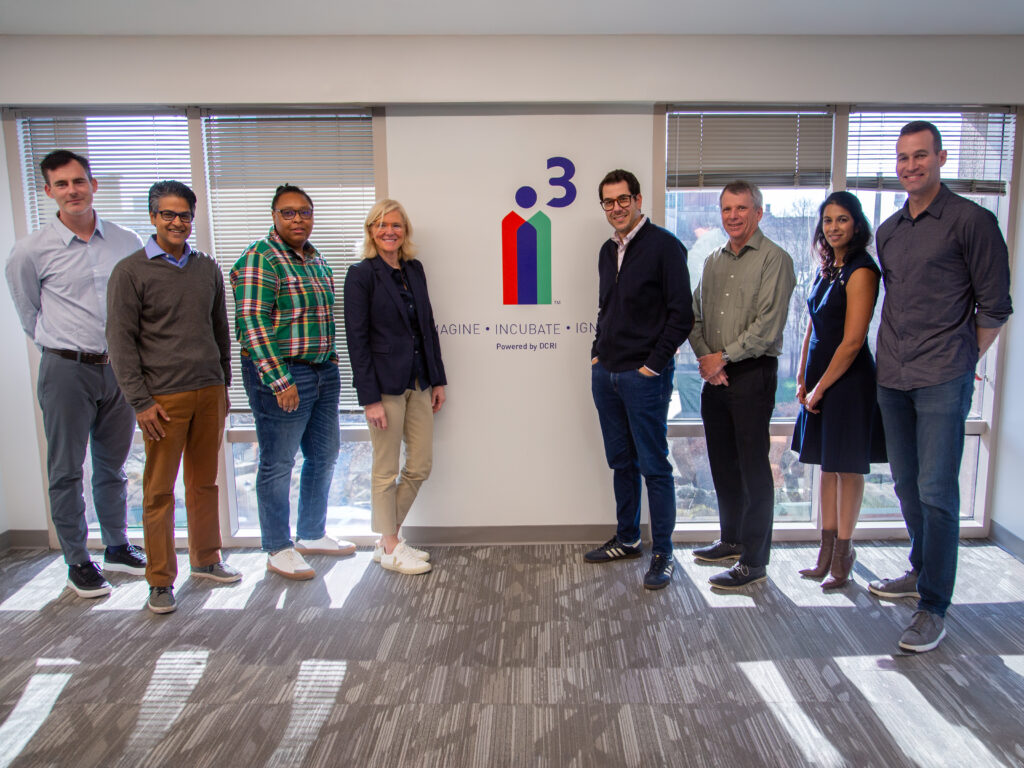
From left: Brian Blackmon, Drew Narayan, Samantha Raines, Donna Parker, Michael Cohen-Wolkowiez, Tom Collopy, Aparna Swaminathan, Dave Sonders. Not pictured: Christoph Hornik.

A Strategic Advantage for the DCRI

i-Cubed is a long-term investment in DCRI's capabilities. By embedding innovation into the fabric of our organization, i-Cubed helps the DCRI:

  • Improve efficiency across trials

  • Create differentiated offerings for sponsors

  • Attract and retain top talent

  • Anticipate and adapt to future challenges

  • Strengthen connections with academic and industry partners

Year One Milestones

Since launching just over a year ago, i-Cubed has helped the DCRI experiment boldly and safely by creating a collaborative environment for new ideas to be tested—whether those ideas come from inside the DCRI, our academic partners in the Duke ecosystem, or external companies seeking collaboration opportunities. i-Cubed's model reduces risk, increases speed, and provides the structure, support, and expert insight necessary to bring new solutions to the people who need them most.

Here are some of the exciting initiatives that i-Cubed has supported to date. These include innovations launched externally, innovations currently being tested within the DCRI, innovations that have been successfully tested and launched as products or services within the DCRI, and early-stage innovations that are still in the exploration phase.

Externally Launched Innovations

  • ExecRx – An innovative "fractional recruitment" model that connects healthcare and research companies with physician and scientist executives and advisors to help startups scale and grow.

Beta Launched Innovations

(Innovations being tested within the DCRI)

  • PreMatch360 – A pre-screening solution that addresses recruitment challenges to minimize participant screening failure, increase engagement, and accelerate trial timelines.

  • Luminate Insights – An education and training provider focused on strengthening clinical research capacity within life science organizations.

Internally Launched Innovations

(Innovations successfully tested and launched as a product or service within the DCRI)

  • KidsHeart – A mobile app for caregivers of infants with severe congenital heart disease that allows vital health data to be tracked at home and shared with care teams.

  • BlueButton – An integration with CMS Blue Button 2.0 that enables real-time, de-identified patient data sharing for researchers and providers.

i-Cubed R&D Innovations

  • AI-Driven Clinical Trial Companion – An AI-powered chatbot that automates participant engagement, consent, and education to support smoother clinical trial enrollment.

  • AI-Powered Trial Accelerator – A digital platform that integrates clinical trial design, operations, and reporting to streamline collaboration and efficiency.

Partner Innovations

The i-Cubed Partner Innovations workstream provides consultation and support to existing companies to help them advance new products and initiatives. Currently, i-Cubed provides thought leadership and creates learning labs for soft testing and feedback on a tool or service, followed by integration into DCRI-run trials for real-life testing and feedback.

So far, i-Cubed has completed three revenue-generating Partner Innovation agreements, which include:

  • Working with pharmaceutical companies to develop an innovative prototype for anew health information network

  • Advising an early-stage health tech startup on product development and integration into large academic medical centers

  • Working with a federal government agency to develop a model for the evaluation, testing, validation, and deployment of decentralized clinical trial products and solutions

There are several other exciting Partner Innovation projects underway, so stay tuned for more updates.

Stay Connected and Share Your Ideas

Stay tuned to Pulse for features that will continue to highlight the transformative innovations happening at i-Cubed. Connect directly with the i-Cubed team by emailing us at icubedcenter@duke.edu to learn how you can be part of this exciting journey, collaborate with like-minded innovators, and share your ideas to help us revolutionize the field of clinical research.

Do you have an innovation idea? The i-Cubed team is always seeking new concepts and collaborations – just reach out.

About i-Cubed 

i-Cubed™ is the center for clinical research innovation, powered by the unique expertise and resources of the Duke Clinical Research Institute. We support individuals, teams, and organizations in turning their ideas into tools, technologies, and processes that transform how clinical research is done — for the benefit of people everywhere. 

 Contact: 

icubedcenter@duke.edu 

Innovator Feature: KidsHeart

February 10, 2025

Innovator Feature: KidsHeart


Video Transcript:

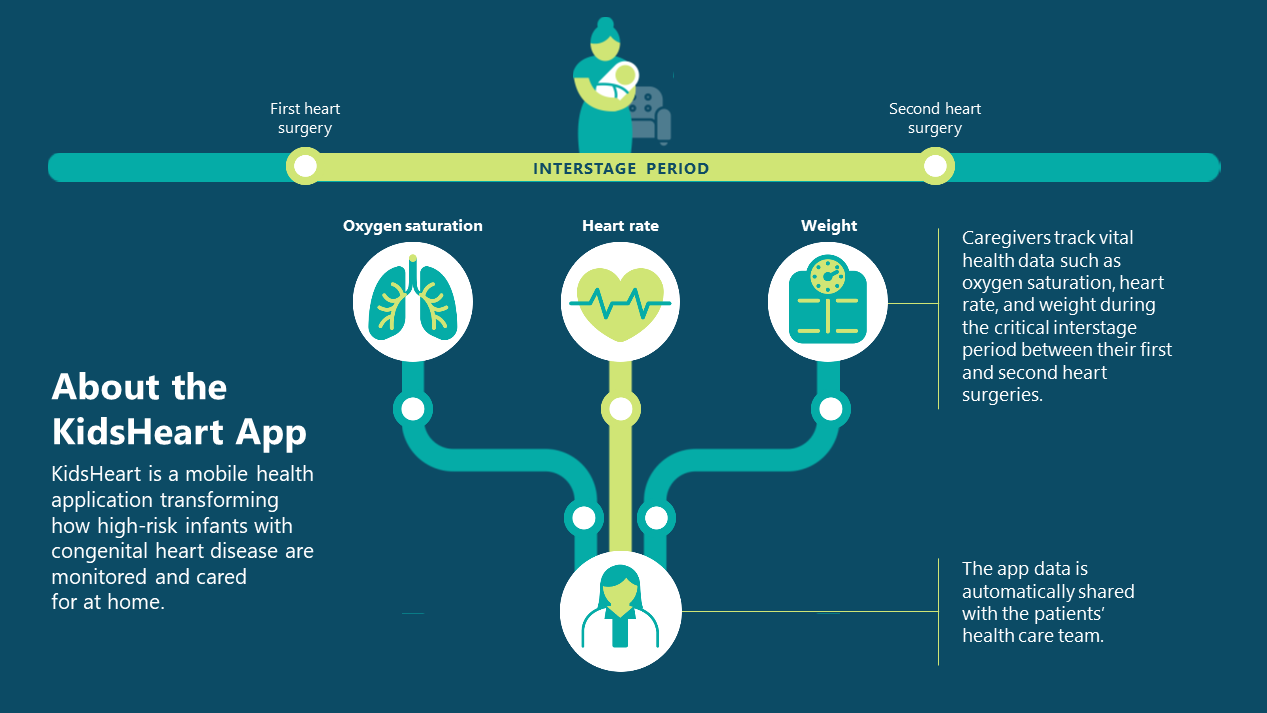
KidsHeart is a mobile health application that is transforming how high-risk infants with congenital heart disease are monitored and cared for at home, allowing caregivers to track vital health data such as oxygen saturation, heart rate, and weight during the critical interstage period between their first and second heart surgeries.

The app data is automatically shared with the patient’s healthcare team. This continuous monitoring has led to earlier interventions and an impressive 55% reduction in emergency room visits in this patient population —improving outcomes and giving caregivers better peace of mind.

As a pediatric nurse practitioner with over 15 years of experience in the cardiac ICU, I am all too familiar with how devastating missing subtle signs of worsening clinical status could be, so our goal with KidsHeart is to catch issues early before they escalate into emergencies.

Additionally, the app allows us to pair data with frequent telemedicine visits, reducing the number of in-person visits required, especially for families who live far from Duke. This has been particularly beneficial for under-resourced families with significant barriers to travelling to appointments.

i-Cubed has been an incredible partner in our journey to commercialization. Their support helped us refine the app to be even more user-friendly and ensured its feasibility for broader application as we explore business opportunities across the country and internationally.

Looking ahead, we plan to expand KidsHeart to other hospitals and adapt the technology for other high-risk pediatric populations. With i-Cubed’s continued support, we aim to further enhance the app’s research capabilities. These tools can power research in patient populations that have been challenging to capture data from in an outpatient setting. Additionally, I think digital health tools like this can help develop predictive models of risk stratification, enabling clinicians to reduce mortality and ultimately improve the quality of life for pediatric patients.

About i-Cubed 

i-Cubed™ is the center for clinical research innovation, powered by the unique expertise and resources of the Duke Clinical Research Institute. We support individuals, teams, and organizations in turning their ideas into tools, technologies, and processes that transform how clinical research is done — for the benefit of people everywhere. 

 Contact: 

icubedcenter@duke.edu 

ExecRx Launches with Support from i-Cubed – Streamlining Medical Leadership for Healthcare and Research Companies

January 13, 2025

ExecRx Launches with Support from i-Cubed – Streamlining Medical Leadership for Healthcare and Research Companies

ExecRx finds and places fractional medical leaders and advisors in roles that support organizations engaged in healthcare and research. The new company was incubated at i-Cubed, the center for clinical research innovation at the Duke Clinical Research Institute (DCRI) 

ExecRx, so named for its prescriptive “right expertise, right dose, right time,” approach to executive and advisor placement, provides companies with fully vetted executive leaders and advisors from the nation’s top academic institutions. This allows companies to tap into the specialized expertise of best-in-class physician and scientist academicians on a fractional basis, without incurring the financial burden of full-time hires. 

This model addresses a critical need for companies in the healthcare and research sectors that often face challenges scaling their operations while maintaining the technical and clinical knowledge essential to move discoveries forward. ExecRx fills this gap by streamlining the process of identifying, placing, and supporting executives (e.g. fractional Chief Medical Officers or Chief Science Officers) and advisors (e.g. Thought Partners, Scientific Advisory Boards), empowering companies to focus on driving their mission forward. In addition to its recruitment services, ExecRx offers post-placement monitoring to ensure executives are well-integrated and continue to meet the evolving needs of the company. 

ExecRx Founder and CEO Michael Cohen-Wolkowiez said, “The right leadership, deployed in the right way, can be the difference between success and stagnation for companies in the healthcare and research sectors. We offer companies a cost-effective solution that accelerates growth, equipping them with the precise leadership needed to transform pioneering discoveries into impactful health solutions.” 

ExecRx offers an attractive opportunity for executives and advisors as well, allowing them to maintain their current academic affiliations while advancing their professional development with valuable coaching and networking opportunities. 

“We offer a practical, right-sized, and agile approach to fractional leadership and advisory needs, for both companies and executives,” said ExecRx Partner Sarah Firman. “For companies, we provide leaders and advisors with unparalleled expertise. For executives, we handle all administrative tasks, from contract negotiations to payroll, enabling them to focus on making a difference,” she said. 

“We are delighted with the launch of ExecRx. Their goals align with i-Cubed’s mission of simplifying the complex, a focus area that aims to identify and address barriers and bottlenecks to innovation, ensuring that the path from discovery to patient care is as swift and efficient as possible,” added Donna Parker, Operations Director for i-Cubed. 

To learn more, visit TheExecRx.com 


About i-Cubed 

i-Cubed™ is the center for clinical research innovation, powered by the unique expertise and resources of the Duke Clinical Research Institute. We support individuals, teams, and organizations in turning their ideas into tools, technologies, and processes that transform how clinical research is done — for the benefit of people everywhere. 

 Contact: 

icubedcenter@duke.edu 

i-Cubed Helps KidsHeart App Expand Care for Infants with Congenital Heart Disease

December 9, 2024

i-Cubed Helps KidsHeart App Expand Care for Infants with Congenital Heart Disease

A new app that can revolutionize pediatric care for infants born with single-ventricle heart disease will soon have a larger reach thanks to support from i-Cubed, the center for clinical research innovation at the Duke Clinical Research Institute (DCRI). 

Infants born with severe congenital heart defects such as Hypoplastic Left Heart Syndrome (HLHS), Pulmonary Atresia, or Tricuspid Atresia face one of the most vulnerable periods of their lives between their first and second heart surgeries, known as the interstage period. KidsHeart is a mobile health application that allows caregivers to track vital health data such as oxygen saturation, heart rate, and weight from home during this critical stage. Data is then automatically shared with the patient’s healthcare team, who can respond immediately if they notice any abnormal readings. 

The KidsHeart team, with strategic support from i-Cubed, worked to refine the app’s technology to increase ease of use, and conduct rigorous market feasibility assessments in preparation for commercialization. i-Cubed supports the development of sustainable, fundable startups through comprehensive resources, expert mentorship, and access to a network of resources.i-Cubed has been instrumental in helping us understand the potential business opportunities for our solution. Their support has allowed us to fine-tune KidsHeart for broader application,” said pediatric cardiologist Christoph Hornik, MD, PhD, MPH. 

KidsHeart was developed by Dr. Hornik, pediatric nurse practitioner Sarah Tallent, DNP, CPNP-AC, and Kevin Hill, MD, MHS, Chief of Pediatric Cardiology at Duke Pediatric and Congenital Heart Center, as an app-based clinical tool to power research studies. With engaged feedback from patient families, they built KidsHeart into a user-friendly home monitoring and data collection tool for caregivers. 

Managing at-home care can be a challenging and stressful time of uncertainty for patient families, leading to an average of 2.7 emergency room visits per patient in this population. The app is transforming how high-risk patients are monitored and cared for at home, allowing for early intervention and improved outcomes.  After a 2022 pilot study at Duke showed a 55% reduction in emergency room visits for KidsHeart patients, the KidsHeart team sought collaboration with i-Cubed to explore commercialization opportunities and scale the app for broader use. i-Cubed helps innovators at Duke bring their solution to life – bridging the gap between research and practical application.  

Tallent reflected on her experience working in the cardiac intensive care unit (CICU), "I was all too familiar with how devastating missing subtle signs of worsening clinical status could be, so our goal [with KidsHeart] was to catch issues early before they escalated into emergencies,” she said.  Dr. Hill reiterated, “This digital health approach has allowed us to stay better connected to our patient families.  We get more real-time feedback on their child’s progress, allowing us to keep a closer tab on some of the subtle clinical markers and intervene more quickly when we need to.” 

For families navigating the challenges of caring for an infant with congenital heart disease, KidsHeart is more than just a monitoring or research tool—it offers peace of mind, knowing that early intervention is just a tap away. Jill Brawley, mother to KidsHeart patient Maya, shared her experience: “For that crucial first year, the KidsHeart app gave us the ability to closely monitor any changes that would imply that adjustments were needed in Maya’s care. This allowed her providers to act quickly... which helped us avoid a decline in her heart health.  As a parent, you want to know every aspect of your child’s health is covered – and with the help of the KidsHeart App and our Duke providers, we had complete confidence that Maya was being thoroughly cared for.”   

Currently, 85% of Duke’s families with interstage, high-risk infants use KidsHeart, and the team plans to expand its use to other hospitals nationwide. The long-term vision for KidsHeart includes applying its technology to other high-risk pediatric populations and further augmenting the app’s research capabilities, for which the team will leverage the clinical research expertise of i-Cubed and the DCRI. “These tools can power research in patient populations that have been challenging to capture data from in an outpatient setting. Additionally, I think digital health tools like this can help develop predictive models of risk stratification, enabling clinicians to reduce mortality and ultimately improve the quality of life for pediatric patients,” Tallent said. 

Update: 

New research, published in Cardiology in the Young, shows that infants with congenital heart defects who were monitored at home with the i-Cubed innovation, KidsHeart, experienced fewer ER visits and better weight-gain outcomes. Read the full study here: duke.is/7/6tmt 


About i-Cubed 

i-Cubed™ is the center for clinical research innovation, powered by the unique expertise and resources of the Duke Clinical Research Institute. We support individuals, teams, and organizations in turning their ideas into tools, technologies, and processes that transform how clinical research is done — for the benefit of people everywhere. 

 Contact: 

icubedcenter@duke.edu 

DCRI’s i-Cubed Partners with BARDA to Strengthen Decentralized Clinical Trial Capabilities for Public Health Emergency Preparedness

November 13, 2024

DCRI’s i-Cubed Partners with BARDA to Strengthen Decentralized Clinical Trial Capabilities for Public Health Emergency Preparedness

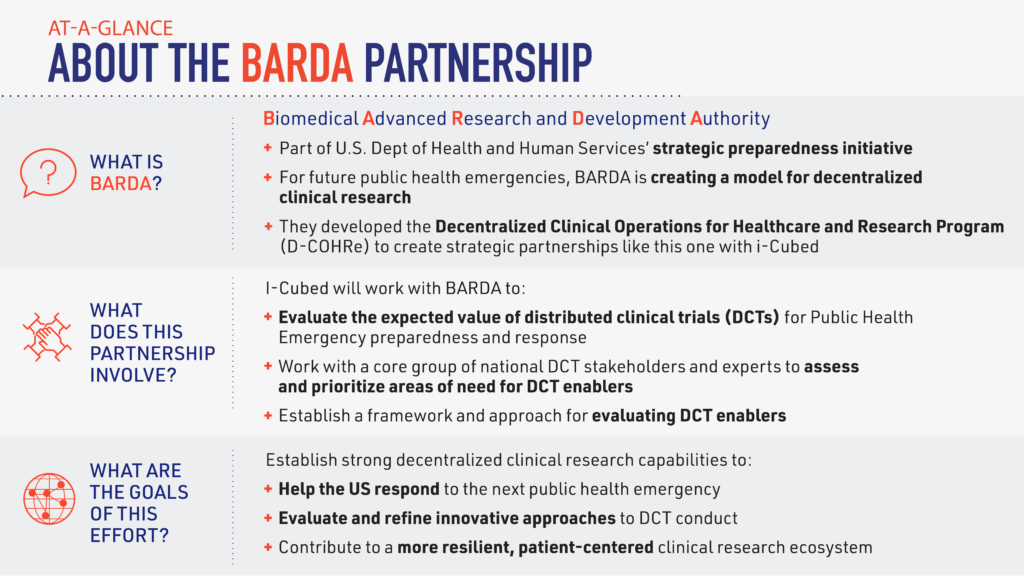
i-Cubed, Duke Clinical Research Institute’s (DCRI) center for clinical research innovation, is partnering with the Biomedical Advanced Research and Development Authority (BARDA), part of the Administration for Strategic Preparedness and Response within the U.S. Department of Health and Human Services, for BARDA’s Decentralized Clinical Operations for Healthcare and Research (D-COHRe) program to enhance decentralized clinical trial (DCT) capabilities to address public health emergencies (PHEs). The primary objective of this collaboration is to identify and understand the challenges and opportunities in decentralized clinical research and to develop a model for the evaluation, testing, validation, and deployment of DCT products and solutions.  

“This is a great opportunity to strengthen our nation’s decentralized trial capabilities, which, in turn, will make the entire public health infrastructure more prepared to handle future public health emergencies,” said i-Cubed Associate Director and Principal Investigator Christoph Hornik, MD, PhD. 

DCTs are clinical trials where the majority of the trial activities, such as patient recruitment data collection and study assessments, occur somewhere other than a traditional trial site. This allows participants to complete the trial at home or another convenient location. These kinds of trials are especially important during PHEs, such as the COVID-19 pandemic, when it can be challenging for participants to safely access clinical trial sites. DCTs also dramatically expand access to rural and underserved populations who are frequently left out of clinical trials. 

DCRI, with expertise through i-Cubed, was selected for this collaboration in part for its commitment to developing sustainable solutions that make clinical research more seamless and inclusive. “As part of our work at i-Cubed, we know how to develop, evaluate and implement innovative clinical research solutions. We are excited to apply our expertise to DCTs in partnership with BARDA,” i-Cubed Executive Director Micky Cohen-Wolkowiez, MD, PhD, commented. 

As part of this collaboration, i-Cubed will conduct a comprehensive assessment of the challenges and opportunities within the DCT landscape and identify and prioritize areas of greatest need for DCT innovations. i-Cubed will establish a robust, responsive, and sustainable framework to evaluate and clinically validate products and technologies intended for use in decentralized settings. Once this new infrastructure is in place, stakeholders will be able to generate and evaluate evidence to increase the use and impact of these new tools. i-Cubed will also conduct health economics and patient preference studies to further inform the impact of DCT enablers. 

Through this partnership, DCRI and BARDA aim to stimulate and accelerate expansion of decentralized clinical study capabilities to facilitate public health emergency preparedness and response and create a more resilient, adaptable, and patient-centered clinical research ecosystem, ultimately enhancing the nation’s ability to respond to public health crises.  

This project has been funded in whole or in part with federal funds from the Department of Health and Human Services; Administration for Strategic Preparedness and Response; Biomedical Advanced Research and Development Authority; Division of Research, Innovation and Ventures (“DRIVe”), under contract number: 75A50124C00056. 

About i-Cubed 

i-Cubed™ is the center for clinical research innovation, powered by the unique expertise and resources of the Duke Clinical Research Institute. i-Cubed supports individuals, teams, and organizations in turning their ideas into tools, technologies, and processes that transform how clinical research is done — for the benefit of people everywhere. 

For more details about this partnership or to explore collaboration opportunities, please contact us at icubedcenter@duke.edu.